Residential park home or holiday lodge? How to tell, and why it matters
This is the single decision that determines what you have bought, and the specification of the home will not tell you which one it is.
· 7 minute read
The short answer
A residential park home can be your only or main residence. It is held under a Mobile Homes Act 1983 agreement, pays council tax, and the park's commission on a resale is capped by statute at ten per cent. A holiday lodge cannot be your main residence, even on a park open twelve months a year: it is held under a holiday licence, pays no council tax, and the park's commission is set by that licence, which here is 15% plus VAT. The two can be the same building from the same factory. What differs is the planning consent on the land and the agreement you sign.
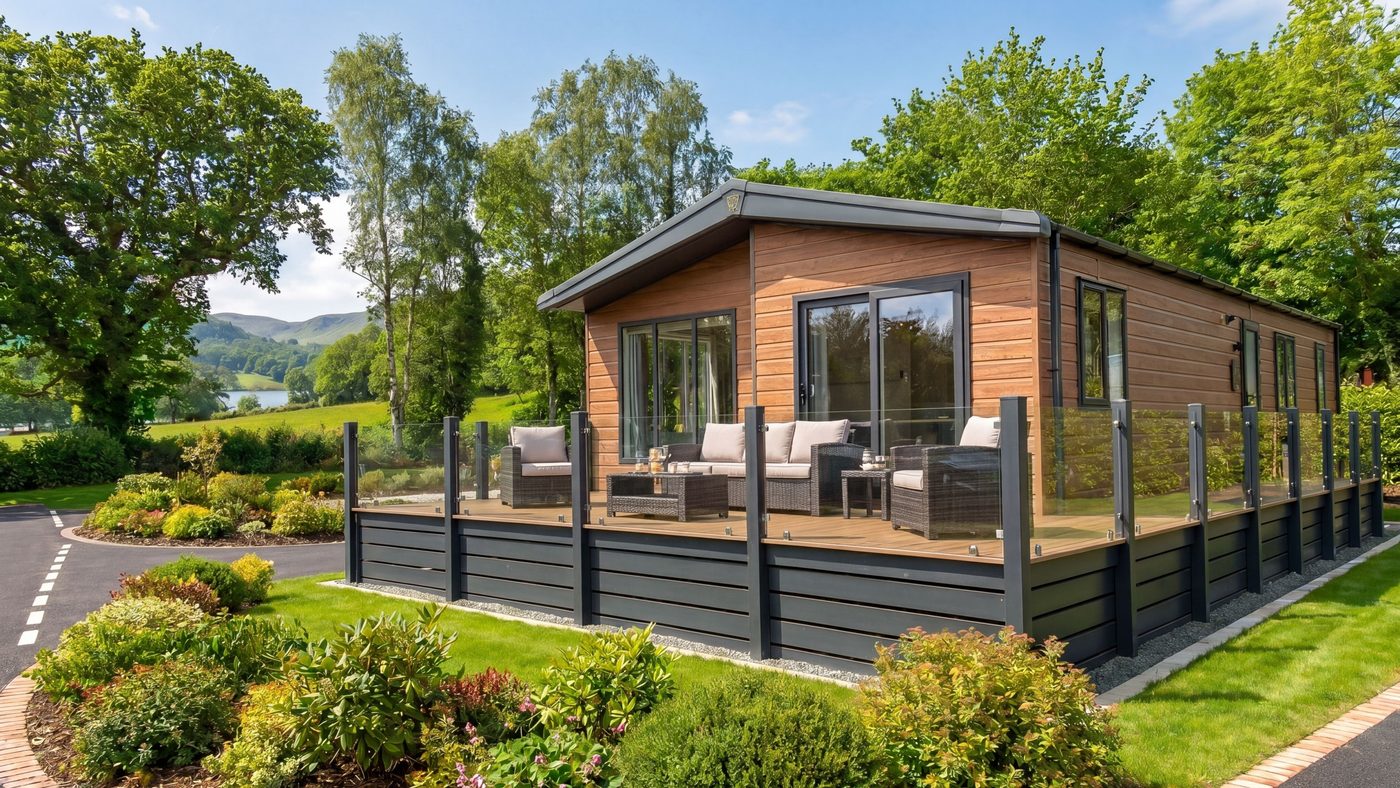
What does "twelve-month park" actually mean?
That the park has planning consent to be open every day of the year, so it does not close for a winter period. That is all it means.
It does not mean you may live there. The usual planning condition on a holiday park requires occupiers to have a main residence elsewhere, and the park is required to keep a register showing it. Local authorities enforce it.
A seasonal park is a third thing: consent for part of the year only, typically March to October. The gates shut and the water is drained. If you are considering a holiday lodge, ask for the consent period in writing, because a closed park and a park with nothing available look identical from outside the gate.
What does the Mobile Homes Act give a residential owner?
The right to keep the home on the plot for as long as the park has consent, which in practice means indefinitely, and an agreement that cannot simply be ended at the park's convenience.
An annual pitch fee review with at least 28 days' notice on a prescribed form, and the right to refuse it and have the First-tier Tribunal decide.
The right to sell the home on the park, with the park's commission capped at ten per cent of the sale price. Since the Mobile Homes Act 2013 the park's approval of your buyer is no longer required for a residential sale in England, even if an older agreement or the site rules say it is.
And the written statement the Act requires, in your hands at least 28 days before you are asked to sign.
What does a holiday licence give you instead?
Use of the lodge whenever you like, in any month, subject to a maximum continuous stay the licence sets. A base that is yours, furnished as you want it, with nothing to reserve and nobody to ask.
What it does not give you is the statutory scaffolding above. The pitch fee review is whatever the licence says. The term is whatever the licence says, and you should ask what happens at the end of it. The commission on a resale is whatever the licence says, which here is 15% plus VAT.
None of that makes a holiday lodge a bad purchase. It makes it a holiday purchase. Price it as a depreciating asset you will enjoy, like a boat, rather than as property.
Which questions settle it?
Four, and they can be asked in one telephone call. Does the park hold residential or holiday consent, and for how many months? Is the agreement a Mobile Homes Act agreement or a holiday licence? What is the commission if I sell? Will you confirm all three in writing before I reserve?
A park that answers those in a sentence each is a park worth buying from. Vagueness on any of the four is the answer to the question you were actually asking.
A fifth, if you intend to let it: is subletting permitted, and through whom? In this portfolio it is offered at Marwell Court through Landal and nowhere else at present.
Does the building standard tell me anything?
It tells you whether the home is comfortable in February, not whether you may be in it. BS3632 is the residential building standard: full insulation, central heating sized for the volume, mains services, a structure certified for year-round occupation. BS EN 1647 is the holiday caravan standard, which assumes seasonal use.
Every home for sale in this portfolio is built to BS3632 with a ten-year structural warranty, including the ones sold as holiday lodges. A lodge built to the residential standard is still a holiday lodge if it stands on a holiday park.
That is the trap worth naming: a very good building on the wrong consent. The specification is reassuring and entirely beside the point.
Where are the residential homes in this portfolio?
Hound Hill in Hampshire and Tarvin Sands in Cheshire, with six homes between them at present. Beechwood Park in Derbyshire holds residential and holiday consent for 180 plots and has nothing released for sale yet.
Everything else currently for sale across the nine parks is a holiday lodge on twelve-month consent.
Questions people ask
Can I live in a holiday lodge if the park is open all year?
+
No. Twelve-month consent means the park does not close, not that a lodge can be your only or main residence. You need an address elsewhere and the park must keep a register showing it.
Is a residential park home subject to council tax?
+
Yes, usually in Band A. A holiday lodge is not: the park pays business rates on the pitch and the pitch fee reflects it.
Do both come with the same warranty?
+
Every new home in this portfolio is built to BS3632 and carries a ten-year structural warranty, whether it is sold as a residential home or a holiday lodge.
Is there stamp duty on either?
+
No. You buy the home and not the land in both cases, so there is no land transaction and no stamp duty land tax.
Can a holiday park become residential later?
+
Only by a change of planning consent, which is a decision for the local authority and not something a park can promise. Never buy a holiday lodge on the expectation that the consent will change.
This is general information and not legal advice. Where this page describes the law it is the law as it stands in England, and the GOV.UK park homes factsheets are the place to check it. The licence or Mobile Homes Act agreement, the park rules and the written statement govern your purchase; you receive them at least 28 days before signing, and we recommend a solicitor who knows park homes reads them.